A1DesignBuild is a designer and builder of homes in Bellingham and Whatcom County, Washington. We specialize in everything from home remodels to complete high-performance home builds, and our over 70 years of providing excellent service to the community assures that your home project gets done right - each and every time.
And now we’re thrilled to announce our Straw Insulated Panel division, a new take on an age old building innovation that provides even more home efficiencies.
Read on to learn more or contact us.
FAQ’s About Straw Insulated Panels (SIPs)
Frequently Asked Questions (FAQ): Straw Structural Insulated Panels (Straw SIPs)
1. What are Straw Structural Insulated Panels (Straw SIPs)?
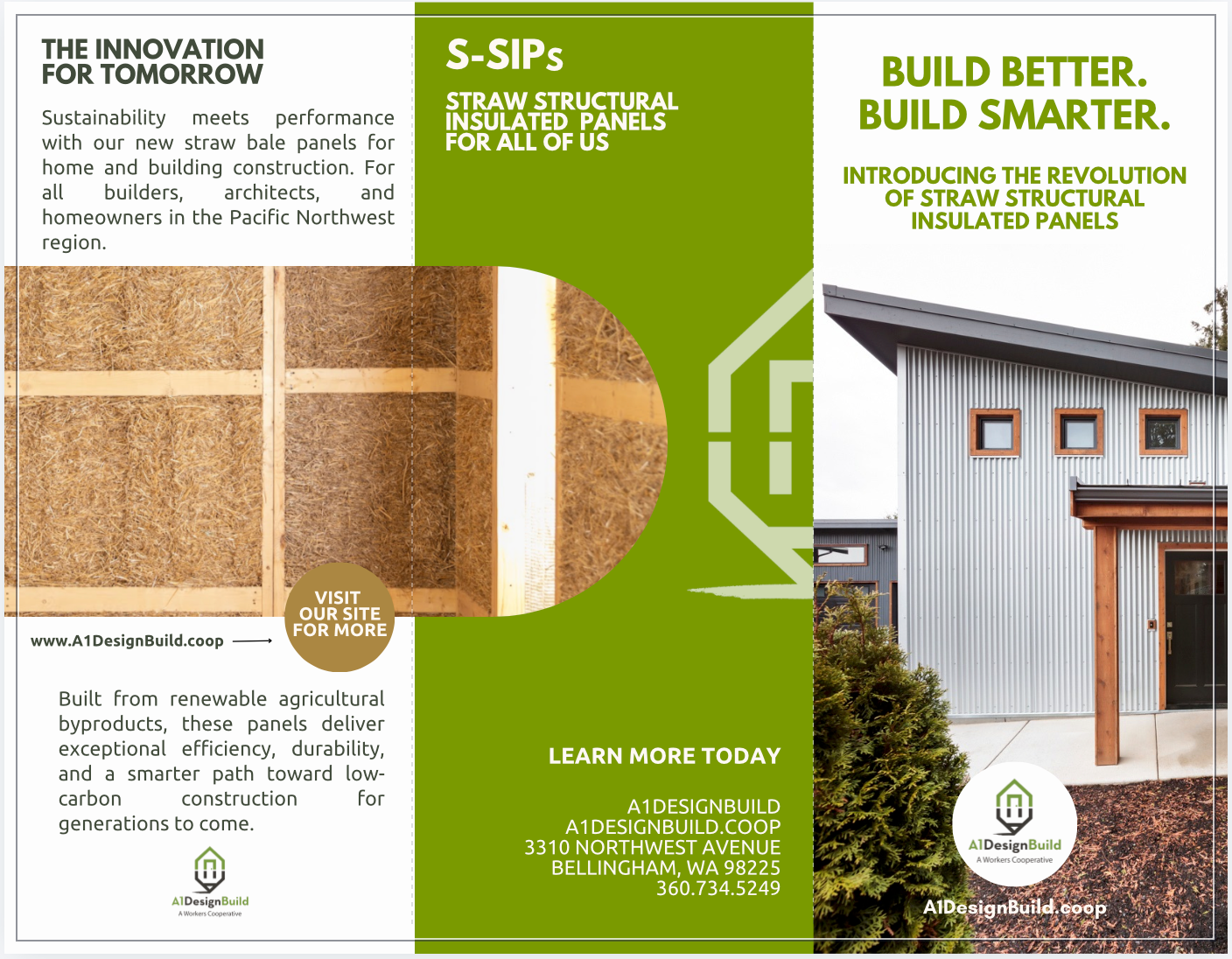
Straw SIPs are prefabricated building panels made from compressed straw in a plywood faced double stud wall. They are designed to provide insulation, structural strength, and enclosure in one system.
2. How are Straw SIPs different from traditional SIPs?
Traditional SIPs typically use foam insulation (like EPS and GPS), while Straw SIPs use agricultural byproducts (straw) as the core material. This makes them more environmentally friendly and lower in embodied carbon.
3. Are Straw SIPs structurally strong?
Yes. When properly engineered and installed, Straw SIPs can be load-bearing, seismically resilient and meet structural building requirements.
4. What is the insulation value (R-value)?
Straw SIPs typically offer:
Approx. R-2.5 per inch or R36 for a 14” thick wall.
Whole-wall performance is often higher due to reduced thermal bridging
Actual R-values vary depending on panel density.
5. Are Straw SIPs environmentally friendly?
Very. Benefits include:
Made from renewable agricultural waste (straw)
Low embodied energy compared to foam insulation
Carbon sequestration potential. Reduced construction waste due to prefabrication
6. Are they resistant to fire?
Yes, when properly constructed. Compressed straw contains very little oxygen, making it resistant to combustion. Additionally, panels are typically covered with fire-rated finishes like drywall or plaster, which increases fire resistance. Study shown here: ASTM E84-98
7. What about moisture and mold?
Panels are constructed in an offsite controlled environment. Once on-site Straw SIPs must be kept dry during construction and properly detailed to manage moisture. When installed correctly with vapor control and weather barriers, they resist water intrusion and mold growth.
8. Do Straw SIPs attract pests or rodents?
No more than conventional construction. The high-density compression of straw and sealed panel design make it difficult for pests to inhabit. Proper detailing and sealing further reduce risk.
9. What types of buildings can use Straw SIPs?
They are suitable for:
Residential homes
Accessory dwelling units (ADUs)
Cabins and tiny homes
All buildings
10. How are Straw SIPs installed?
Panels are prefabricated off-site and assembled on-site:
Delivered ready-to-install
Set in place with telehandler, or crane, and in some cases manual lifting (depending on size)
Joined with plywood splines or engineered fasteners
Installation is typically faster than conventional framing.
11. Can Straw SIPs be customized?
Yes. Panels are manufactured to accommodate:
Window and door openings
Custom dimensions
Integrated structural components as needed
12. Are they compatible with other building systems?
Yes. Straw SIPs can integrate with:
Timber framing
Steel framing
Conventional foundations
Standard roofing systems
13. Do Straw SIPs require special maintenance?
No unusual maintenance is required. Like any building:
Maintain exterior cladding
Ensure proper drainage
Inspect for moisture issues periodically
14. Where can I source Straw SIPs?
A1DesignBuild in the PNW region.
15. Are Straw SIPs a good choice for sustainable building?
Yes. They are an excellent option for those seeking:
Low-carbon construction
High energy efficiency
Use of renewable materials
Reduced environmental impact
16. Do I have to plaster walls?
No. Plaster walls are an option. On the interior, you can have a service cavity with drywall. On the exterior, we recommend rain screen and siding applications clad to the SIPs plywood.
17. Is there a crane required to install panels?
No. A crane is not required but can be used. We recommend a telehandler.
18. How big are the panels?
A standard panel is 39” wide x 14” deep x 8’ tall and weighs about 350 pounds. Panels can come up to 12’ in height. Panel sizes can be customized to work with the design
19. Do you use any treatments or binders on the straw?
No. We source the straw locally and no binders or treatments are added.
20. Do I need an architect?
No, but we are happy to work with your architect to optimize your design. We have a full-service design department available if you do not have an architect or designer.
21. Can you provide an engineer?
Yes. We prefer to work closely with our recommended engineers.
Interested in learning more about SIPS? We can help. Just fill out the form below and we’ll be in touch.