
Aging in Place - A Smarter Home for a Longer Life
In 2026, one of our goals is to help people ‘Age in Place’ in their homes in Whatcom County for many years to come. By thinking ahead and planning for the future, we can all retain our independence and age with grace where we live. It’s the smart approach. It’s the right approach. If you want to also read our Aging in Place roundtable, click here.
Designing a house that supports independence room by room
Most people want the same thing as they get older: the ability to stay in the home they love.
This idea—known as aging in place—is increasingly common. Remaining in a familiar environment preserves independence, routines, and community connections. But the typical American home wasn’t designed with aging in mind. Narrow doorways, slippery and inaccessible bathrooms, poor lighting, and awkward storage can turn everyday spaces into hazards.
Fortunately, thoughtful design can transform a home into a place that supports safety, comfort, and dignity for decades.
The key is to think room by room.
Small improvements—better lighting, safer fixtures, and smarter layouts—can dramatically reduce fall risk and make daily tasks easier. Modifications such as grab bars, accessible storage, and step-free entrances can be implemented to help older adults remain independent at home for years and years.
Below is a guide to creating a home that works with you as you - or your loved ones - get a little older.
Entry & Exterior
The transition between outside and inside
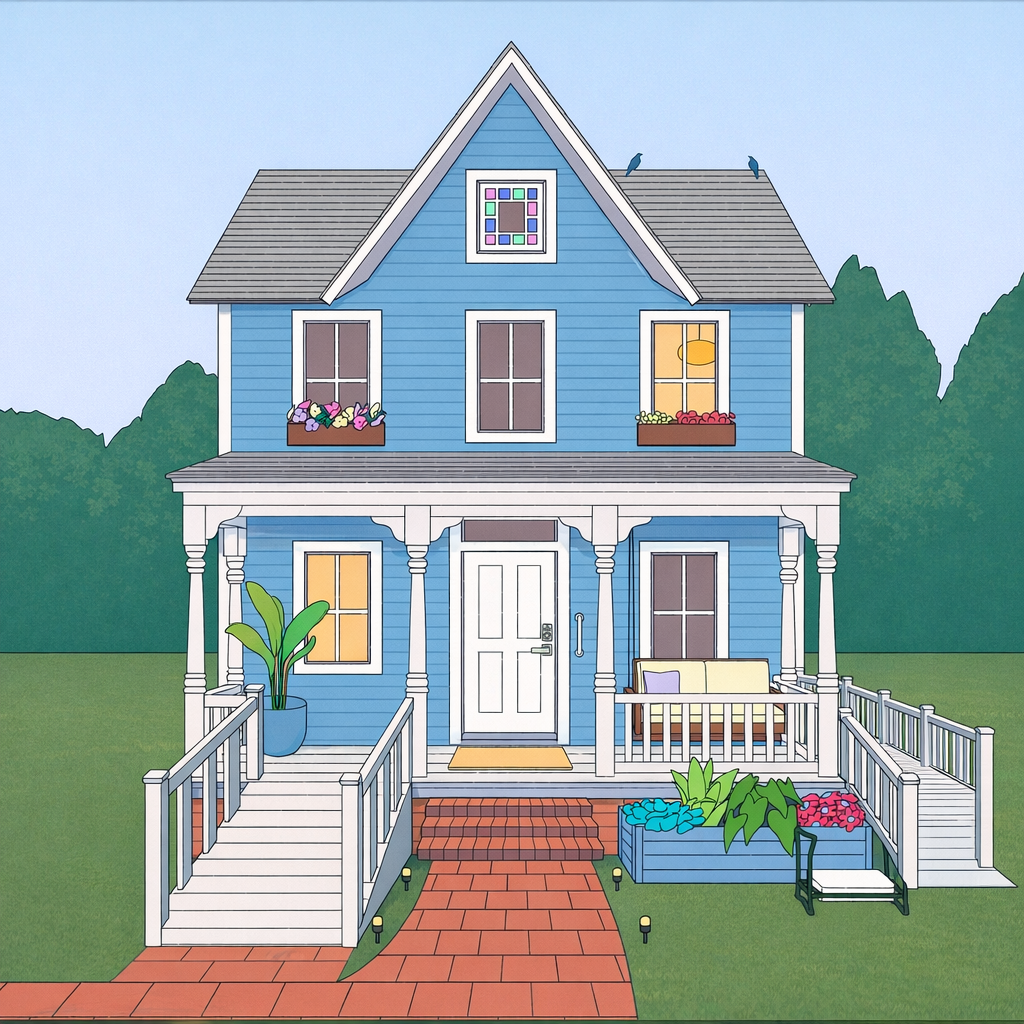
The front door is often the first obstacle that aging homeowners encounter. Are there stairs to the front door? Are pathways uneven? Is the lighting poor, especially at night?
Even a heavy front door can present a day-to-day challenge.
So let’s think about a few things we should consider:
Smart upgrades
Install step-free entries or ramps (especially if a wheelchair is needed in coming years.
Add motion-activated lighting
Use lever-style door handles (and maybe even a lighter door)
Improve non-slip walkways
Install video doorbells and/or smart locks
Good exterior design sets the tone: the home should welcome you in without effort or risk. It’s the right place to start making improvements.
Kitchen
The heart of the home should remain usable
Cooking is one of the most meaningful daily rituals—but traditional kitchens can be difficult for older adults to navigate.
High cabinets, heavy appliances, and poor lighting create unnecessary strain. Let’s take a look:
Smart upgrades
Pull-out shelves and drawers
Lowered or varied-height countertops
D-shaped cabinet handles
Induction cooktops (cooler and safer)
Touchless faucets
Wheel chair accessibility as needed
The goal isn’t to remove the character from your kitchen—it’s a kitchen that quietly supports independence. One that is still beautiful but easy to navigate. Convenience does not have to be a compromise.
Bathroom
The highest risk room in the home
Bathrooms are responsible for a large share of household injuries, largely due to water, tight spaces, and hard surfaces.
Fortunately, small upgrades can dramatically improve safety without ruining aesthetic.
Smart upgrades
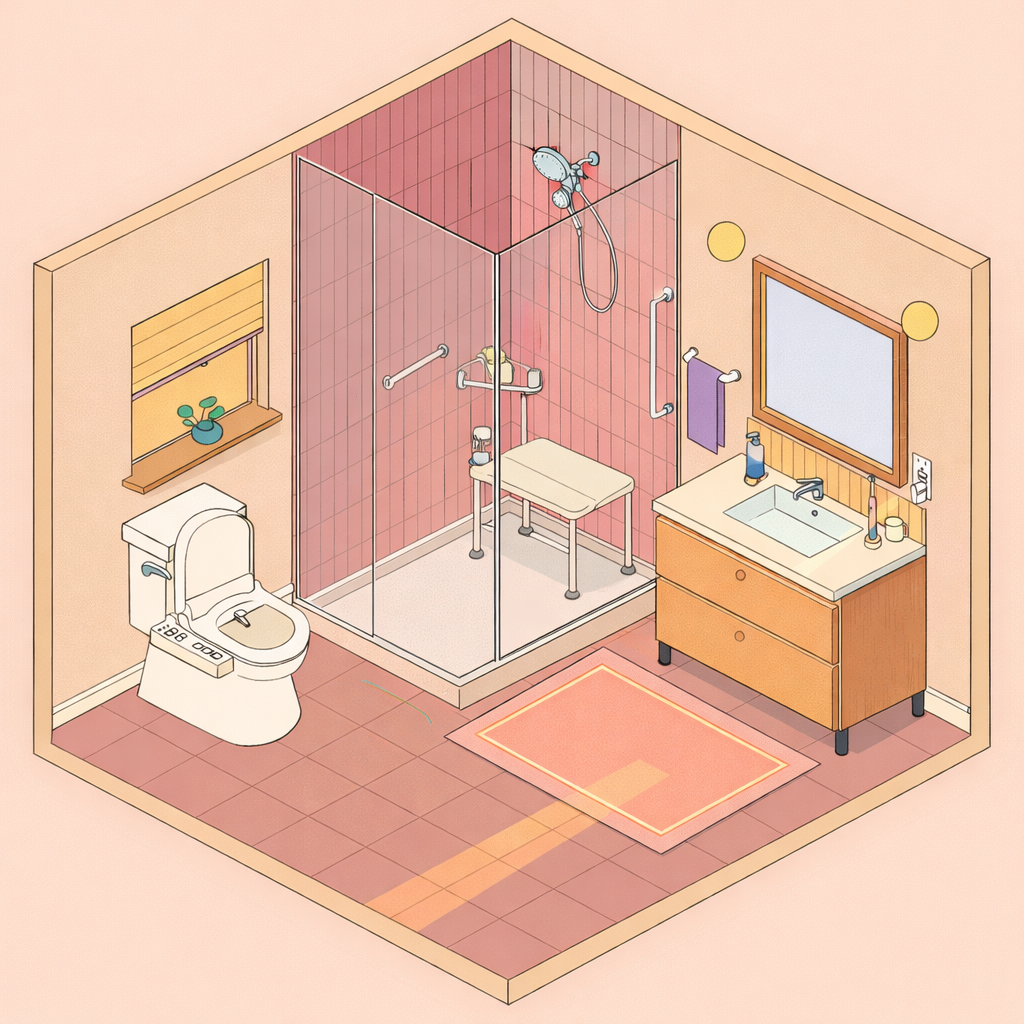
Walk-in or curbless showers
Shower seating
Grab bars near toilets and showers
Non-slip flooring
Raised or comfort-height toilets
A well-designed bathroom should feel spa-like, not clinical, while providing critical support. With a little imagination, the right planning, and the right approach, it is possible. Read on after the illustrations.
-
![]()
An Inviting Exterior
It all begins with an inviting exterior. Add good smart lighting, get rid of uneven pathways, and allow for easy access to the front door. A little planning goes a long way.
-
![]()
A Well Thought Out Bathroom
You don’t need to sacrifice beauty for safety. But think things through with easy access tubs and showers, smart toilet placement, and non-slip surfaces.
-
![]()
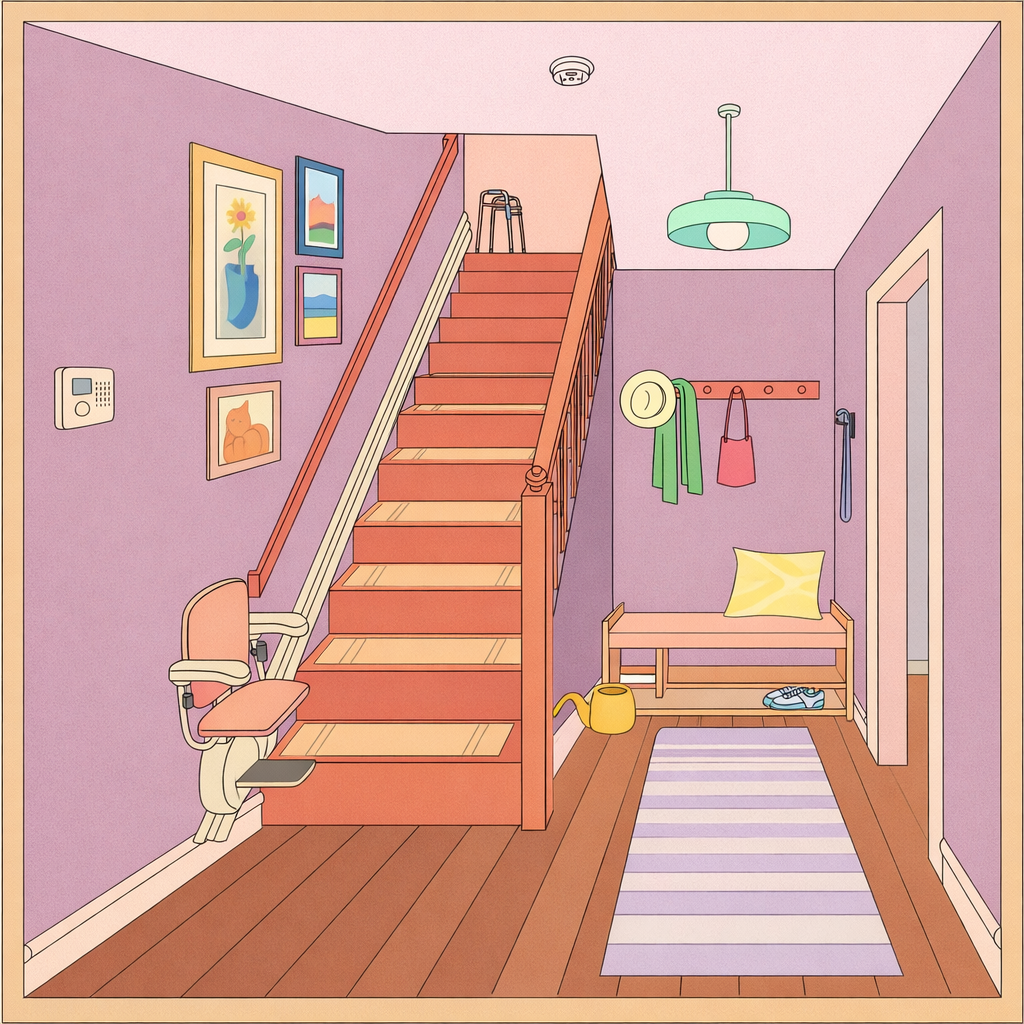
Clear the Entryways + Stairs!
How many times have we all tripped over a pair of shoes? As we get older, this presents more of a danger. So keep things clear and the rugs low. Plus a stair lift and a bench to sit are clear winners.
-
![]()
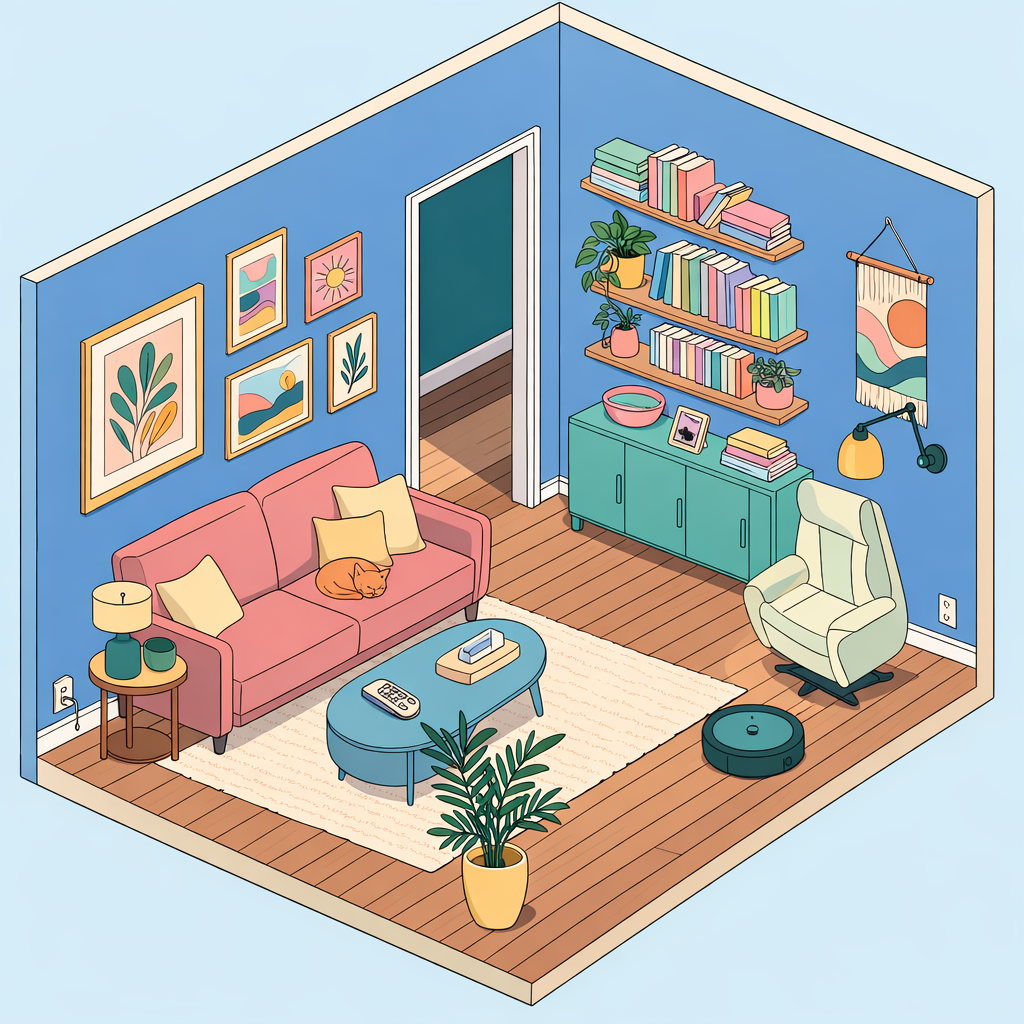
Make the Living Room Livable
Living rooms and family rooms often contain clutter, rugs, and furniture that can create obstacles. Get good seating that can help lift you into a standing position as needed.
Bedroom
Comfort, accessibility, and nighttime safety
The bedroom should support rest and easy mobility.
Keep in mind that nighttime trips to the bathroom are one of the most common times for falls to occur. Minimize the chance of that with these simple upgrades.
Smart upgrades
Motion-activated floor lighting that is dim or indirect
Bed heights that allow easy standing
Adjustable beds
Clear pathways without rugs or cords
Always being intentional with space planning to and from the bathroom for navigating when tired
Simple lighting improvements alone can significantly reduce fall risk. And lose any cords or other obstructions!
Living Areas
Everyday comfort without hidden hazards
Living rooms and family rooms often contain clutter, rugs, and furniture that can create obstacles. Not to mention grandchildren’s toys and other hazards.
These spaces should always prioritize clear movement and supportive seating. And retain your character, of course.
Smart upgrades
Firm chairs with armrests
Lift-assist recliners
Wider walking paths between furniture
Better overhead and reading lighting
Low Pile rugs to minimize tripping hazards
No cords along walking paths. Keep it clear!
TV and light remotes within easy reach
Comfortable furniture should help you stand up easily, not trap you in place. Don’t let the couch eat you alive. The ideal seat height is 18-20 inches and the ideal seat depth is 16-20 inches.
Whole-Home Improvements
Invisible upgrades that matter
Some of the most powerful aging-in-place improvements happen quietly in the background. Let’s take a look at some upgrades that can greatly improve your home and make for more comfortable and safer living.
Smart upgrades
Wider doorways (32–36 inches)
Lever handles instead of knobs
Voice-controlled lighting and thermostats
Smart emergency alert systems
Updated smoke and carbon-monoxide detectors
Technology increasingly allows homes to become responsive partners in daily life. Plus things like smartwatches (like the iWatch), smart speakers (Alexa) and TVs can be more than just a convenience. They can be a lifesaver.
The Real Goal: Freedom
Aging in place isn’t about preparing for decline or sacrificing the beauty of your home. It’s about designing homes that support freedom and independence at every stage of life. When homes are designed thoughtfully, they allow people to remain connected to their routines, their neighbors, and their communities—often for decades longer than traditional housing would allow. The best aging-in-place homes don’t look specialized.
They simply look well designed.
The beauty can continue. And so can you.
Aging in Place in Whatcom County
Aging in place in Whatcom County is supported by resources like the Whatcom Council on Aging (WCOA), which offers meals, activities, and the Bellingham at Home program. The Northwest Regional Council (NWRC) provides Aging & Disability Resources (ADR) for planning. Key services include transportation, health, and home modification assistance to maintain independence.
Key Resources and Services:
Information & Coordination:
Northwest Regional Council (NWRC) - Aging & Disability Resources (ADR): Offers, information, and referrals for senior services.
Aging Well Whatcom: Focuses on improving community support for older adults.
Support Services & Meals:
Whatcom Council on Aging (WCOA): Provides Meals on Wheels and other services.
Alzheimer Society of Washington: Offers support groups and related classes.
Social & Activity Centers:
Bellingham Senior Activity Center: Offers classes in fitness, arts, and technology for seniors.
Bellingham at Home: A network for seniors aiming to live independently.
In-Home Care & Assistance:
Visiting Angels: Provides specialized, in-home care in Bellingham.
WA Cares Fund: Provides benefits for home care and modifications.
If you need assistance navigating these resources, please reach out to us with the form below, and we’ll connect you to someone who can help. Here’s to a long and healthy life - salud!
For more great information on technology that can be of assistance in your home, see this article from the New York Times.

Need some help or want a FREE CONSULTATION on the best way for Aging in Place, Aging with Grace? Reach out Patrick Martin at 360-734-5249 or fill out the contact form below and we’ll be in touch. And thanks for stopping by.